
June 2, 2026 · Clean Proper
Why Eco-Friendly Cleaning Matters for Your Family's Health
A clean home shouldn't come at the cost of the air you breathe. Here's why non-toxic, family- and pet-safe products make a real difference for your family.
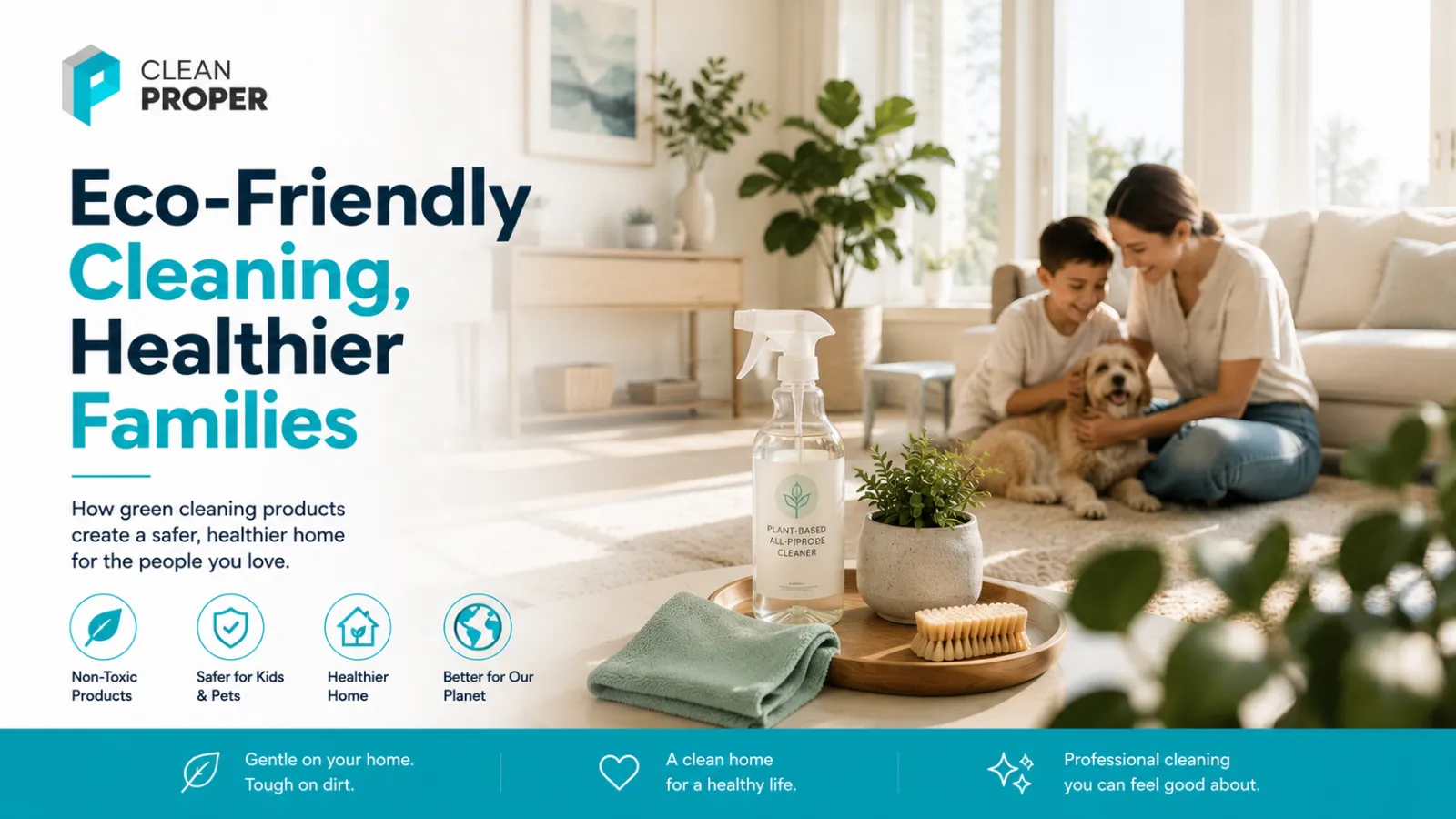
We tend to judge “clean” by how a room looks and smells. But that lemon-fresh scent is often a sign of volatile organic compounds (VOCs) lingering in your air — and a spotless-looking home can still be one that’s harsh to breathe in. At Clean Proper, we think a clean home should also be a healthier one. Here’s why that matters, and what actually makes the difference.
The problem with conventional cleaners
Many standard cleaning products release VOCs and leave chemical residues on the surfaces your family touches every day. For households with young children, pets, or anyone with asthma or allergies, that can mean more irritation, not less. The “clean smell” isn’t cleanliness — it’s airborne chemistry. Because most of us clean indoors with the windows closed, those fumes concentrate exactly where your family spends the most time.
What “eco-certified” actually means
“Green,” “natural” and “eco” aren’t regulated words — anyone can print them on a bottle. What counts is independent certification. In Canada, look for recognised marks like EcoLogo (UL) or Green Seal, which test a product’s ingredients, toxicity and environmental impact rather than taking the label’s word for it. That’s the difference between genuinely non-toxic cleaning and greenwashing — a nice colour scheme on the same old chemistry.
What eco-certified products change
Eco-certified, non-toxic products clean just as effectively without the harsh fumes and residues. They’re gentler on skin, safer around pets and crawling toddlers, and they don’t trade a tidy surface for a lungful of solvents. Used properly, they handle everyday grime and most build-up perfectly well — including the detail work in a deep clean.
There’s a lingering myth that “green” means “weak.” In practice, the limiting factor in most cleaning isn’t the harshness of the chemical — it’s contact time and technique. Give a good non-toxic cleaner a moment to actually work, back it with proper wiping and rinsing, and it handles kitchen grease, bathroom soap scum and everyday grime without complaint. The homes we clean this way don’t come out any less clean; they come out just as clean, minus the fumes.
Where it matters most
Some spots in the home are worth prioritising:
- Kitchen surfaces — counters and tables where food is prepared and eaten shouldn’t carry chemical residue.
- Bathrooms — small, poorly ventilated rooms concentrate fumes; low-odour products make a real difference here.
- Floors and low surfaces — exactly where babies, toddlers and pets spend their time, hands and paws down.
- Kids’ rooms and play areas — the places you least want lingering solvents.
If you’re going to be selective, start with the rooms your family touches most.
Technique matters as much as the bottle
The right products are only half of it — how you clean is the other half. Dusting and dry-sweeping can actually make air quality worse by flicking fine particles back into the air. We use reusable microfibre cloths, which trap dust and allergens in the cloth (and rinse out) instead of smearing them around, and we work top-to-bottom so nothing settled gets stirred back up. It’s a simple discipline that turns “looks clean” into “is genuinely cleaner."
"But does eco-friendly actually disinfect?”
It’s the most common question we get — and the honest answer is yes, when it’s done right. Certified non-toxic products lift and remove the vast majority of everyday dirt and germs, and thorough physical cleaning (the wiping, the rinsing, the microfibre) removes far more than most people expect. For the occasional situation that calls for genuine disinfection — illness in the house, for example — the goal is to target it deliberately, not to fog every surface in your home with harsh chemicals as a default.
Small changes, real difference
You don’t have to overhaul everything at once. Switching to non-toxic products, opening a window to ventilate while you clean, and using microfibre instead of paper towels are the highest-impact steps. It’s exactly how we clean every home — because the people who live there have to breathe the result.
Want a cleaner home that’s genuinely healthier? Book a one-off deep clean or an ongoing regular schedule, and we’ll bring the eco-certified, non-toxic products and microfibre to you. Curious how often your home actually needs a deeper pass? See our guide on how often to deep clean. Ready now? Get a quote.
Ready for a healthier, properly clean home?
More from the blog
Condo Cleaning in Etobicoke: Keeping a Lakeside Suite Spotless
A Humber Bay or Mimico condo by the water has cleaning quirks a house doesn't — floor-to-ceiling glass, lake-effect grit and salt, and building access. Here's a practical guide to keeping a lakeside Etobicoke suite genuinely clean.
ReadDeep Cleaning a Richmond Hill Home: A Seasonal, Room-by-Room Guide
A deep clean is what resets the parts of a home everyday tidying never reaches. Here's what a proper deep clean covers room by room, when to book one in Richmond Hill, and how it differs from a regular clean.
ReadHouse Cleaning in Vaughan: Keeping a Big Family Home on Top of Itself
Vaughan is a city of large, newer family homes — and a 3,000-plus-square-foot house doesn't keep itself clean. Here's a realistic, zone-by-zone routine to keep a Vaughan home consistently fresh without losing every weekend to it.
Read